tattoos
Showing posts with label Plant Propagation. Show all posts

Saturday, June 18, 2011

Why Aren't My Iris Blooming by Stan Ames

While manning the Master Gardener booth at the Golden Farmer’s Market last Saturday a woman asked me why her Iris do not all bloom.

I thought for a while and suggested they might be overcrowded or stressed from last year’s dividing activities. She said she had not divided any of her Iris, ever, and asked when to do that.  I said not until after the blooming was complete and not to cut back leaves until the divisions were made. She seemed satisfied with the answers and went on to get a nice big juicy breakfast burrito from the booth next to ours.  Imagine smelling that wonderful aroma all morning and not having enough time to buy one for yourself, much less eating one.  AND they were all gone when we broke down the booth!


Well, I have been thinking of that question now for a couple of days and decided to look up Iris on the http://www.ext.colostate.edu/  website.  Remarkably and somewhat surprisingly I was mostly correct!

 According to “Plantalk Colorado” 1018-Perennials: How to divide
“Plants that begin to produce more foliage at the expense of flowers may be overgrown.  To determine if plants are overgrown, count the number of stems that emerge from the base.  If five or more strong stems are present the plant may need to be divided.” (I found one clump with ten in my collection)
“When dividing plants, pick a cool spell in the spring or fall, and gently dig up a clump with as many roots as possible.  Expose the central rhizome or stem by shaking or washing away the soil.  Then, with a sharp knife, cleanly slice the plant into several new pieces.  Leave a minimum or two to three growing points, or it may take many years for the plants to recover. Place in newly prepared soil and keep them moist until they re-establish.  Share surplus divisions with friends.”  (Most likely when I do this in August I will be looking for parked cars with the windows rolled down!)

“It’s a good idea to start with a single clump of one kind of plant until you master division, rather than risking an entire planting.”  (It is  wise to have a first aid kit handy, sometimes sharp knives slip!)


According to “Plantalk Colorado” 1041-Iris
“Iris should be divided every three to four years.  Divide the rhizomes, which are underground stems, after the plant have finished flowering, but no later than August.”  (I was close!) “Discard any segments that are mushy or riddled with holes.  Separate the healthy rhizomes into segments with one fan of leaves and several feeding roots. Cut the leaves back to six inches. When setting the new plant spread the roots out in the soil and position the top third of the rhizome above the soil surface.  Arrange the foliage to face outward away from the center of a group.

Other helpful information can be obtained from Colorado State University Extension fact sheets:
Perennial gardening
Flowers for Mountain Communities 
Herbaceous Perennials

Sunday, May 1, 2011

Vinca Minor, Free And Easy by Caroline Reardon

Do you have a shady spot in your yard that needs ground cover to hold back the erosion or to just cover a bare spot? If you or a friend are lucky enough to have a mat of thriving Vinca minor, you can easily propagate enough starts at home to solve your problem and save money to buy those spectacular plants you dreamed about over the winter.

Vinca minor, also known as periwinkle or creeping myrtle, propagates itself by putting out runners that take root in the soil, much as a strawberry plant does. You can use these runners to create healthy starts for those bare places in your yard. They will spread more quickly in areas that receive more water, and grow well in partial sun to full shade. An extra bonus‚this perennial remains evergreen throughout the winter.


 On the outer edges of the existing ground cover "crop" you will find the young, newly rooted Vinca runners which are the plants' most vigorous growers. Locate a clump and dig it up with your trowel. Shake it lose from the undergrowth and other roots and lift it out. Locate the clump's primary runner, which goes back to the mother plant, and snip it free with scissors.

You may find one clump can be snipped into three or more little rooted plants. Separate their roots, trim off any long stems and plant them in individual small pot with good soil mix.

Pinch off any flowers so all the plants' energy will be directed to developing good root systems in their new homes.

Water carefully so as not to disturb the roots and place the pots in a pan to catch any water runoff. Move them inside to a location with indirect sunlight.

 To keep their environment humid while rooting, cover the plants with plastic wrap. Mist them lightly every few days and check your little starts regularly to make sure the soil isn't drying out. Water if necessary.

 After about three weeks, gradually withdraw the plastic wrap and then take the plants to a shady area outside for several days to harden them off. Pop the Vinca out of their pots and transplant into the bare spots you'd planned for them, leaving  6"-8" between plants. Mulch to retain moisture and remember to water these little starts regularly for the first year as they get established.

Your home-grown Vinca minor starts will spread to become a lovely mass of shiny-leafed ground cover with periwinkle blue blossoms within a year or two, all for free.

Tuesday, September 7, 2010

Late Summer in Your Garden by Donna Duffy

It’s September, and Colorado gardeners are busy harvesting their vegetables and enjoying the last blooms of summer. Before all the fall gardening chores kick in, here are some simple September tasks to tackle.


Store Seeds
In Colorado, all vegetable and flower seeds will store on a shelf at room temperature for at least one year without significant loss of germination. The most important factors in determining how long seed can be stored are seed moisture and storage temperature. The drier the seeds are, the longer they will store. Drying seeds in the shade is better than in direct sunlight. Never use a microwave oven to dry seeds. You may use a conventional oven if you keep the door open and the seed is not heated to more than 100 degrees. Package the seed in moisture-proof containers and store it in a refrigerator or deep freezer. Use sealed cans or jars rather than plastic bags.

Harvest Lavender
Harvest lavender stems in the morning when the oils are the most concentrated and at least 50% of the flowers are opened. Use pruning shears to cut the lavender stems as long as possible. Form bundles of 50 to 100 stems and secure them with rubber bands (they will contract as the stems dry out). Dry the harvested lavender in a cool, dark place where there is good air circulation.

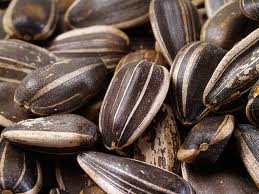
Harvest and roast sunflower seeds! Sunflowers are mature when the back of the head turns yellow and the seeds take on a brownish tinge. If birds begin to pick at the heads before they are mature enough to cut, tie a perforated plastic bag over the head. Pick the heads and hang them upside-down in a warm, dry place. When the head is dry, the seeds separate easily. Be sure the seeds are fully dried before putting them in air-tight containers for storage.

Sunflower seeds can be roasted by heating in a 300° oven for 15 -25 minutes. If salting is desired, soak seeds overnight in a brine of 2 Tbsp salt to 1 cup water. Boil the brine mix for a few minutes and drain. Spread seeds thinly on a cookie sheet and roast in a 200° oven for 3 hours or until crisp. Enjoy! (Source: Planttalk Colorado #1828).

Start a gardening journal. Use it to record what worked this summer, what you want to change, new plants you’d like to try…anything that is fresh on your mind at the end of the gardening season.  Be specific rather than general: for example, “eliminate Primrose and Valerian in front garden” will be more helpful than “get rid of invasive plants.”  If you are like many of us, those details get lost in the hustle-bustle of the holidays and the long, cold days of winter. In the springtime, your journal will be a bridge between fall and spring, and will help you jump start the new gardening season.

Sunday, August 15, 2010

Iris, Iris Everywhere! Rejuvenating the Iris Garden


How's your iris looking?  Mine are pretty sad right now.  This article from a sister Master Gardener in Larimer County if filled with good advice on rejuvenating your iris garden.

Colorado State University Extension - Iris, Iris Everywhere!

Thursday, February 25, 2010

Starting Plants Indoors From Seed

 Yes, dear gardener, it is FINALLY time to start thinking about starting your plants from seed.  Here's a great article with lots of good advice for the gardener.

ck

Starting Plants Indoors From Seed : Planet Green


blogger templates | Blogger